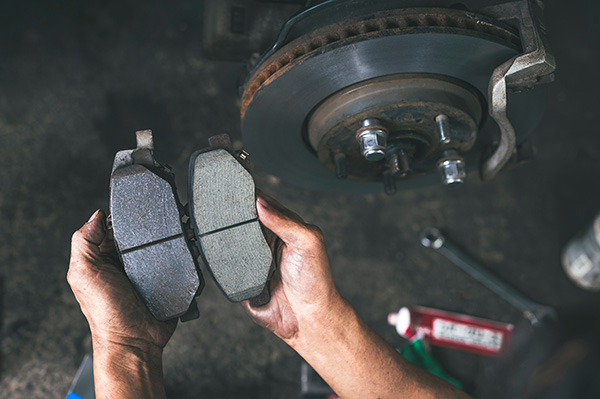
Brake pads and rotors wear a little every time you slow down. That is normal. The problem starts when they wear past the point where they can stop the vehicle quietly, evenly, and safely.
Many drivers wait for grinding before scheduling brake service, but grinding often indicates the problem has already progressed too far. Pads and rotors give earlier clues if you know what to watch for. A sound, vibration, pedal change, or visible wear pattern can tell you the brake system needs attention before the repair gets larger.
Brake Pads Get Thinner Over Time
Brake pads are designed to wear down. They press against the rotors, generating the friction needed to slow down the vehicle. As the pad material gets thinner, the brakes may still work, but there is less material left to handle heat and pressure.
Some brake pads have wear indicators that make a high-pitched squeal when the pads are low. That sound is meant to warn you before the pad material is gone completely. If the warning is ignored, the metal backing plate can quickly contact the rotor and damage it.
Pad thickness should be measured during an inspection. Looking through the wheel may give a rough idea, but it does not always show the inner pad, which can wear faster than the outer pad if a caliper or slide pin is sticking.
Squealing Usually Means The Pads Need Attention
A squeal when braking often points toward brake pad wear. It may come from the wear indicator, glazed pad material, vibration between the pad and rotor, brake dust, or missing hardware. Moisture and light surface rust can also cause a short squeak after the vehicle sits.
The key is whether the noise keeps coming back. A quick morning squeak that disappears after one stop may be less concerning than a squeal that happens every time you slow down. Repeated squealing should be checked before the pads wear down to metal.
Brake noise is a clue, not a complete diagnosis. The pads, rotors, calipers, and hardware should all be checked together.
Grinding Means The Brake Repair May Already Be Larger
Grinding is usually more serious than squealing. If you hear a harsh metal-on-metal sound while braking, the pad material may be worn away. At that point, the metal backing plate can cut into the rotor.
Once the rotor is scored or damaged, replacing only the pads may not be enough. New pads need a good rotor surface to work correctly. A damaged rotor can cause noise, vibration, poor contact, and shorter pad life.
Grinding can also come from road debris or a bent backing plate, but it should still be checked soon. If metal parts are rubbing where they are not supposed to, every stop can add damage.
Brake Rotors Can Wear, Warp, Or Become Uneven
Rotors are the metal discs that the pads clamp onto. They deal with heat, pressure, moisture, and friction. Over time, rotors can become thin, grooved, rusted, uneven, or heat-damaged.
A worn rotor may cause pulsing in the brake pedal, steering wheel shake, vibration while stopping, or scraping sounds. You may feel it more when braking from highway speed or going downhill. The rotor surface may look deeply grooved or have heavy rust on the braking area.
Rotors have minimum thickness limits. If a rotor is too thin, it cannot handle heat properly and should be replaced. Measuring rotor thickness is important because appearance alone does not tell the full story.
Warning Signs Pads And Rotors Are Worn
Brake wear can show up through sound, feel, smell, or how the vehicle behaves. Watch for signs like:
- Squealing when braking
- Grinding or scraping
- Brake pedal pulsing
- Steering wheel shake while stopping
- Vehicle pulling to one side
- Longer stopping distance
- Burning smell near a wheel
- Heavy brake dust on one wheel
- Brake warning light
- Thin pad material visible through the wheel
These symptoms can involve pads, rotors, calipers, hoses, hardware, tires, or suspension parts. The right repair starts with a thorough inspection of the entire brake system.
Calipers And Hardware Affect Pad And Rotor Wear
Brake pads and rotors do not wear out on their own. Calipers, slide pins, clips, shims, hoses, and brackets all affect how the pads contact the rotors. If a caliper sticks applied or the hardware is rusty, one pad may wear much faster than the other.
A sticking caliper can also overheat a rotor, causing burning smells, pulling, or one wheel to feel hotter than the others. If only the pads and rotors are replaced while the caliper problem remains, the new parts may wear out quickly.
That is why regular maintenance and brake checks are important. A complete brake service should look for the reason parts wore out, not only replace the parts that made noise.
Why You Should Not Wait Until Brakes Feel Unsafe
By the time brakes feel clearly unsafe, the repair may already involve more than pads. Thin pads can damage rotors. Bad rotors can ruin new pads. Sticking calipers can overheat both. Old brake fluid can affect pedal feel and hydraulic parts.
Catching brake wear early gives you more control over the repair. You may be able to replace pads before rotors are badly damaged, or repair a caliper issue before it ruins one side of the brake system.
Get Brake Service In San Jose, CA, With Quality Tune Up Car Care Center
If your brakes squeal, grind, vibrate, pull, smell hot, or feel different when stopping, Quality Tune Up Car Care Center in San Jose, CA, can inspect the pads, rotors, calipers, and related brake parts.
For brake service before worn pads and rotors become a larger repair, contact us to schedule an appointment.