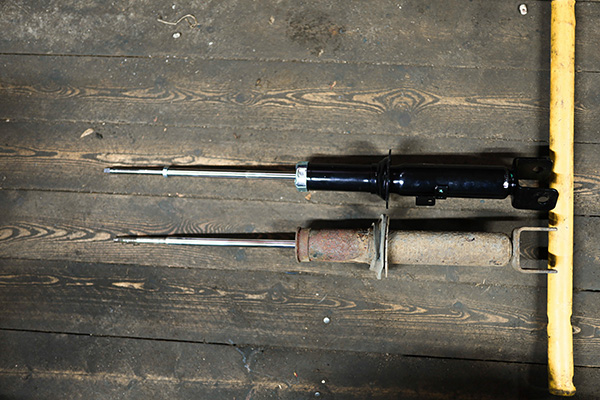
Shocks and struts do more than make the ride comfortable. Their main job is controlling how much the suspension moves after the tires hit bumps, dips, or uneven pavement. When they wear out, the car can still drive, but it starts feeling less settled and less predictable.
The change usually happens slowly, which is why drivers get used to it. A little more bouncing, a little more body movement, and slightly worse tire wear can all seem normal after a while. These five signs tell us the suspension is no longer controlling the vehicle the way it should.
1. The Car Keeps Bouncing After a Bump
A good shock or strut allows the suspension to move, then brings that movement under control quickly. If the car keeps bouncing after a speed bump, dip, or rough section of road, the dampers are no longer doing enough to control the springs.
At our shop, we pay attention to how many times the body moves after the initial bump. One controlled rise and settle is normal. Repeated up-and-down movement means the suspension is taking too long to calm down, and worn shocks or struts move high on our list.
2. The Front End Dives Hard Under Braking
Some forward movement under braking is normal because the vehicle's weight shifts forward. When the shocks or struts are worn, that movement becomes much more noticeable.
You might feel the nose drop hard during a stop, especially when braking quickly or going downhill. The car can feel less stable because the suspension takes longer to settle while the tires are already being asked to slow the vehicle. We still check the brakes, control arm bushings, and other suspension parts because excessive dive can have more than one cause.
3. The Vehicle Leans or Feels Loose in Turns
Shocks and struts help control how quickly the body moves when you steer. Once they weaken, the car can lean farther through corners and feel like it takes an extra moment to settle after the turn.
Drivers sometimes describe this as a floating or loose feeling. You turn the wheel, but the body seems to keep moving after the steering input is already finished. If that feeling gets stronger on highway ramps or quick lane changes, we check the dampers along with sway bar links, bushings, tires, and alignment.
4. Your Tires Are Wearing in a Cupped Pattern
Worn shocks and struts can let the tires bounce against the road instead of staying in steady contact with it. Over time, that movement can create cupped or scalloped wear around the tread.
Signs we look for include:
- Alternating high and low spots in the tread
- A humming or droning noise that changes with road speed
- Uneven wear around the tire instead of across the full tread
- A rough feel when you run your hand over the tread
- One corner wearing differently from the others
During an inspection, we don't automatically blame the shocks. Wheel balance, suspension looseness, alignment, and tire condition can also create irregular wear. The wear pattern simply tells us where to look next.
5. You See Leaking Fluid or Damaged Mounts
Shocks and struts contain hydraulic fluid that helps control suspension movement. A light film around the body does not always mean the component has failed, but visible fluid running down the housing is a much stronger sign.
We also inspect the mounts, bushings, shafts, springs, and surrounding hardware. A worn upper strut mount can create clunks or pops even when the strut itself is still dry. A leaking damper with damaged mounts gives us more than one reason to recommend repair.
Worn Shocks and Struts Can Affect More Than Ride Comfort
Suspension control affects braking, tire contact, steering response, and how the vehicle behaves on rough pavement. If a tire is bouncing instead of staying planted, it has less consistent contact with the road during braking and cornering.
Regular maintenance helps us catch that gradual loss of control before it starts feeling normal. A road test, tire inspection, and suspension check usually tell us much more than simply replacing shocks or struts based on mileage alone.
There Is No Single Mileage for Replacement
Some shocks and struts last a long time, while others wear sooner because of rough roads, heavy loads, potholes, or aggressive driving. That is why we do not use one mileage number as a replacement rule.
We look at how the vehicle behaves, whether the tires are wearing correctly, whether the dampers are leaking, and whether any related suspension parts are loose. If the car still feels controlled and the components are in good condition, there is no reason to replace them simply because the odometer reached a certain number.
Get Shock And Strut Service In San Jose, CA, With Quality Tune Up Car Care Center
If your vehicle bounces after bumps, dives during braking, leans in turns, or is wearing its tires unevenly, Quality Tune Up Car Care Center in San Jose, CA, can inspect the shocks, struts, mounts, tires, and related suspension parts.
Schedule a suspension inspection to find out which components are worn before poor control starts affecting how the car handles every day.